
Uncategorized
Retatrutide Peptide: What Is It? Complete Research Guide
Sep
Retatrutide Peptide: What Is It? Complete Research Guide
Retatrutide is a synthetic peptide-based compound that has become an important subject of research into metabolic signalling and incretin biology.
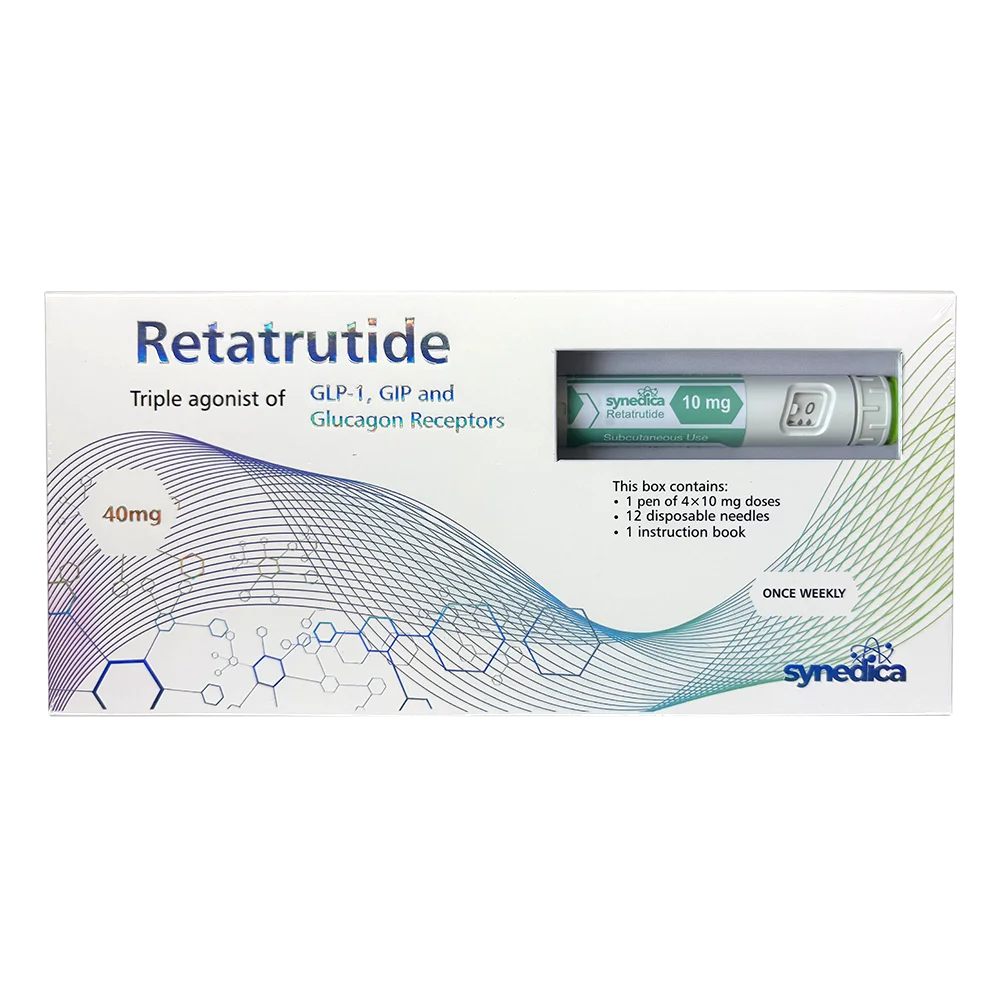
What makes Retatrutide particularly interesting is its activity at three different hormone receptors: the glucose-dependent insulinotropic polypeptide (GIP) receptor, glucagon-like peptide-1 (GLP-1) receptor and glucagon receptor.
Because of this combination, Retatrutide is commonly described as a triple receptor agonist.
This guide explains what Retatrutide is, how its receptor activity works, its molecular characteristics, research applications, analytical testing and storage considerations.
Important: This article is provided for educational and research information. Research-use Retatrutide products are not intended for human or veterinary use and should not be presented as substitutes for authorised medicines.
What Is Retatrutide?
Retatrutide is a synthetic peptide-based compound designed to interact with three receptor systems involved in metabolic signalling:
- GIP receptor
- GLP-1 receptor
- Glucagon receptor
This three-pathway activity distinguishes Retatrutide from compounds that primarily target one or two of these receptors.
Retatrutide has been investigated in clinical research, particularly in relation to metabolic and energy-regulation pathways. It remains an important compound for research into multi-receptor peptide pharmacology.
How Does Retatrutide Work?
Retatrutide’s research interest comes largely from its ability to activate three distinct receptor pathways.
Understanding each pathway helps explain why Retatrutide is different from other peptide-based compounds.
GLP-1 Receptor Activity
GLP-1, or glucagon-like peptide-1, is an incretin hormone involved in several physiological processes.
GLP-1 receptor signalling has been associated with:
- Glucose-dependent insulin secretion
- Regulation of glucagon secretion
- Gastrointestinal processes
- Appetite-related signalling
- Glucose metabolism
Retatrutide has activity at the GLP-1 receptor, making this pathway relevant to research investigating its biological effects.
GIP Receptor Activity
GIP, or glucose-dependent insulinotropic polypeptide, is another incretin hormone.
The GIP receptor is involved in metabolic signalling and is therefore an important target in research into incretin biology.
Retatrutide’s GIP receptor activity contributes to its overall multi-receptor mechanism.
Glucagon Receptor Activity
The third major component of Retatrutide’s activity is its interaction with the glucagon receptor.
Glucagon is involved in energy metabolism and glucose regulation.
Glucagon receptor signalling can influence processes associated with:
- Glucose production
- Energy expenditure
- Lipid metabolism
- Metabolic regulation
The inclusion of glucagon receptor activity distinguishes Retatrutide from dual GIP/GLP-1 receptor agonists.
Retatrutide’s Triple-Receptor Activity
One of the defining characteristics of Retatrutide is its simultaneous activity across:
GIP + GLP-1 + Glucagon
This combination has made Retatrutide an important subject for researchers investigating how multiple metabolic signalling pathways interact.
From a research perspective, this creates opportunities to study:
- Multi-receptor pharmacology
- Incretin signalling
- Glucagon signalling
- Energy metabolism
- Glucose regulation
- Peptide structure and activity
- Metabolic pathways
The effects observed in any particular study depend on the experimental model and research conditions.
Retatrutide Molecular Structure
Retatrutide is a 39-amino-acid peptide engineered to interact with multiple receptor systems.
Its structure includes modifications that are intended to influence its biological properties and duration of activity.
The molecular characteristics of Retatrutide are relevant to research involving:
- Peptide structure
- Receptor interactions
- Molecular stability
- Pharmacokinetics
- Analytical identification
- Peptide formulation
Researchers studying Retatrutide can therefore investigate both its molecular characteristics and its multi-receptor activity.
What Is Retatrutide Being Researched For?
Retatrutide has been investigated extensively in research concerning metabolic and endocrine pathways.
Research areas include:
Metabolic signalling
Researchers can investigate how simultaneous activation of GIP, GLP-1 and glucagon receptors affects metabolic pathways.
Receptor pharmacology
Retatrutide provides a model for studying interactions involving multiple metabolic receptors.
Energy metabolism
The combination of incretin and glucagon receptor activity has made Retatrutide relevant to research into energy regulation.
Glucose metabolism
Researchers have studied how multi-receptor activity relates to glucose regulation.
Peptide pharmacology
Retatrutide is also relevant to broader research into engineered peptide compounds and multi-target receptor agonists.
Retatrutide vs Tirzepatide
Retatrutide and Tirzepatide are both important subjects of metabolic peptide research, but their receptor activity differs.
| Characteristic | Retatrutide | Tirzepatide |
|---|---|---|
| GIP receptor activity | Yes | Yes |
| GLP-1 receptor activity | Yes | Yes |
| Glucagon receptor activity | Yes | No |
| Receptor profile | Triple agonist | Dual agonist |
| Research interest | Multi-receptor metabolic signalling | GIP/GLP-1 signalling |
The key distinction is therefore the glucagon receptor component.
Tirzepatide acts at GIP and GLP-1 receptors, whereas Retatrutide has activity across GIP, GLP-1 and glucagon receptors.
Read more: [Tirzepatide vs Retatrutide: Understanding the Research Differences]
Retatrutide Peptide Testing
Analytical testing is an important consideration when evaluating research peptides.
Different analytical methods provide different types of information.
HPLC Testing
High-Performance Liquid Chromatography (HPLC) can be used to analyse peptide samples and assess relative purity.
HPLC may provide information relating to:
- Main compound peaks
- Potential impurities
- Retention time
- Relative peak areas
- Sample composition
The result should be interpreted in the context of the analytical method used and the specific peptide being tested.
Related article: [What Is HPLC Testing? Understanding Peptide Purity Analysis]
Mass Spectrometry for Retatrutide
Mass spectrometry can provide information about the molecular mass of a compound and can be used as part of peptide identification and characterisation.
For Retatrutide research products, MS can complement chromatographic analysis by providing additional information about molecular identity.
Using more than one analytical technique can provide a broader analytical picture than relying on a single measurement.
Read more: [Mass Spectrometry for Peptides: How Identity Is Analysed]
Retatrutide Certificate of Analysis
A Certificate of Analysis (COA) can provide batch-specific information about a research product.
Depending on the supplier and laboratory, a Retatrutide COA may include:
- Product name
- Batch or lot number
- Testing date
- Analytical method
- Purity result
- Molecular mass
- Laboratory information
- Product specifications
Researchers should examine the actual information contained within a COA and consider the testing methods and documentation provided.
A COA should not be treated as a substitute for understanding the analytical methodology behind the reported results.
Related article: [What Is a Peptide Certificate of Analysis (COA)?]
How Should Retatrutide Peptide Be Stored?
Appropriate storage is an important consideration for peptide research products.
Storage requirements depend on the particular formulation and supplier instructions.
Unreconstituted Retatrutide
For powdered research peptides, storage may involve keeping the product in a cool, dry environment protected from direct light.
For long-term storage, freezing may be appropriate where specified by the product’s storage requirements.
Liquid or Reconstituted Retatrutide
Liquid or reconstituted formulations may require refrigeration.
Where refrigeration is specified, a commonly used temperature range is:
2°C to 8°C (36°F to 46°F)
The product-specific storage instructions should always take precedence because storage requirements can differ between formulations.
Read more: [How to Store Research Peptides: Temperature, Light & Handling]
What Can Affect Retatrutide Stability?
Several environmental factors may influence peptide stability.
Temperature
Storage outside the recommended conditions may affect the stability of peptide compounds.
Light
Protecting peptide products from unnecessary direct light exposure can be an important storage consideration.
Moisture
Moisture can be particularly relevant to powdered peptide formulations.
Temperature fluctuations
Repeated changes between storage temperatures may affect some formulations.
Handling
Appropriate handling can help reduce unnecessary environmental exposure and protect product integrity.
Researchers should always follow the storage and handling information supplied with the specific product.
Retatrutide Research and Regulatory Status
Retatrutide is an important compound in ongoing clinical and pharmaceutical research.
It should be distinguished from an authorised medicinal product.
A research-use Retatrutide product supplied for laboratory purposes should not be presented as an approved medicine or as a substitute for a licensed pharmaceutical product.
Researchers should consider the applicable regulatory requirements and intended use of any product they obtain.
Retatrutide Research Peptides in the UK
Researchers sourcing Retatrutide peptide products in the UK should consider several factors when evaluating a supplier.
These can include:
- Product identity
- Purity information
- Analytical testing
- Batch documentation
- Storage requirements
- Packaging
- Product traceability
- Research-use designation
Analytical documentation such as HPLC results and mass spectrometry data can provide useful information when assessing a research product.
Frequently Asked Questions About Retatrutide
What is Retatrutide?
Retatrutide is a synthetic peptide-based compound that acts at the GIP, GLP-1 and glucagon receptors. It is being investigated in metabolic and pharmaceutical research.
Is Retatrutide a GLP-1 peptide?
Retatrutide has GLP-1 receptor activity, but it is not limited to that pathway. It also acts at GIP and glucagon receptors and is therefore commonly described as a triple receptor agonist.
What makes Retatrutide different from Tirzepatide?
The primary distinction is receptor activity. Tirzepatide acts at GIP and GLP-1 receptors, while Retatrutide also has glucagon receptor activity.
How is Retatrutide tested?
Analytical techniques including HPLC and mass spectrometry can be used to assess characteristics such as purity and molecular identity.
How should Retatrutide peptide be stored?
Storage requirements depend on the formulation. Powdered products may require protection from moisture, heat and direct light, while liquid or reconstituted formulations may require refrigeration at 2°C to 8°C.
Always follow the product-specific storage instructions.
What is Retatrutide used for in research?
Research involving Retatrutide can investigate multi-receptor signalling, incretin biology, glucagon signalling, metabolic pathways and peptide pharmacology.
Is Retatrutide an approved medicine?
Research-use Retatrutide should not be represented as an authorised medicine. Its regulatory status and availability for therapeutic use are separate from its use as a research compound.
Conclusion
Retatrutide is a distinctive peptide-based research compound because of its activity across three metabolic receptor pathways: GIP, GLP-1 and glucagon.
This triple-receptor profile makes it relevant to research into incretin biology, glucagon signalling, metabolic regulation and multi-receptor peptide pharmacology.
When evaluating Retatrutide research products, researchers should consider identity, purity, analytical testing, batch documentation, storage requirements and product traceability rather than relying on a single specification.
HPLC and mass spectrometry can provide complementary analytical information, while appropriate storage and handling can help protect product integrity.
For researchers investigating Retatrutide, understanding both its molecular characteristics and its analytical requirements provides a useful foundation for responsible research.
