
Uncategorized
Dianabol and Clenbuterol 40: Complete Research Guide
Sep
Dianabol and Clenbuterol : Research Guide
Dianabol and Clenbuterol are two compounds that are frequently discussed in sports science, pharmacology and performance-related research. Although they are sometimes mentioned together, they are chemically and pharmacologically different compounds.
Dianabol, also known as methandrostenolone or methandienone, is an anabolic-androgenic steroid (AAS).
Clenbuterol is a sympathomimetic compound that primarily interacts with beta-2 adrenergic receptors.
Understanding the difference between these compounds is important when researching their molecular characteristics, mechanisms of action, analytical testing and potential research applications.
This guide provides an educational overview of Dianabol and Clenbuterol 40, with a focus on research, compound identification, quality considerations and responsible handling.
Important: This article is for educational and research information only. Dianabol and Clenbuterol should not be presented as approved treatments or used for human or veterinary purposes outside applicable medical and regulatory frameworks. Research-use products should be handled only in accordance with applicable laboratory requirements.
What Is Dianabol?
Dianabol is the commonly used name for methandrostenolone (methandienone), a synthetic anabolic-androgenic steroid.
Unlike Tirzepatide and Retatrutide, Dianabol is not a peptide. It belongs to the steroid class of compounds and has a chemical structure derived from the androgenic steroid framework.
Dianabol has been studied in the context of:
- Androgen receptor pharmacology
- Steroid chemistry
- Anabolic-androgenic activity
- Metabolism of steroid compounds
- Analytical chemistry
- Pharmaceutical and biochemical research
Its chemical properties make it distinguishable from peptide-based research compounds.
How Does Dianabol Work?
Dianabol is an anabolic-androgenic steroid that interacts with the androgen receptor.
The androgen receptor is a nuclear receptor involved in the biological response to androgenic compounds.
When an androgenic compound interacts with this receptor, it can influence cellular signalling and gene transcription.
From a research perspective, Dianabol can therefore be studied in relation to:
- Androgen receptor signalling
- Steroid metabolism
- Structure-activity relationships
- Anabolic-androgenic pharmacology
- Steroid analytical chemistry
The biological effects of an androgenic compound depend on factors including its molecular structure, receptor interactions, metabolism and experimental conditions.
What Is Methandrostenolone?
Methandrostenolone is the chemical name commonly associated with Dianabol.
It is a synthetic steroid structurally related to testosterone.
The terms Dianabol, methandrostenolone and methandienone are therefore closely associated with the same compound.
For research and analytical purposes, using the correct chemical name is important because it helps distinguish the compound from other anabolic steroids with similar properties or names.
Dianabol Research Applications
Dianabol can be relevant to research involving steroid pharmacology and analytical chemistry.
Potential research areas include:
Androgen receptor research
Researchers can investigate interactions between steroid compounds and androgen receptors.
Steroid metabolism
The metabolism of synthetic steroids can be studied using biochemical and analytical methods.
Structure-activity research
Researchers can compare molecular structures to investigate how chemical modifications influence biological activity.
Analytical chemistry
Dianabol can be identified and characterised using appropriate analytical techniques.
Pharmaceutical research
Steroid compounds can be used as subjects in research concerning formulation, metabolism and analytical methodologies.
What Is Clenbuterol?
Clenbuterol is a sympathomimetic compound with activity primarily associated with beta-2 adrenergic receptors.
It is structurally and pharmacologically different from Dianabol.
While Dianabol belongs to the anabolic-androgenic steroid class, Clenbuterol belongs to a different class of compounds that interact with adrenergic receptor systems.
This distinction is important when discussing the two compounds from a scientific perspective.
How Does Clenbuterol Work?
Clenbuterol primarily interacts with beta-2 adrenergic receptors.
Beta-2 adrenergic receptors are part of the adrenergic signalling system and are found in various tissues.
Activation of these receptors can influence cellular signalling and smooth-muscle activity.
From a research perspective, Clenbuterol can therefore be studied in relation to:
- Beta-adrenergic receptor pharmacology
- Adrenergic signalling
- Receptor selectivity
- Pharmacokinetics
- Metabolism
- Analytical chemistry
The effects of Clenbuterol depend on the experimental system, concentration, receptor distribution and other biological factors.
What Does Clenbuterol 40 Mean?
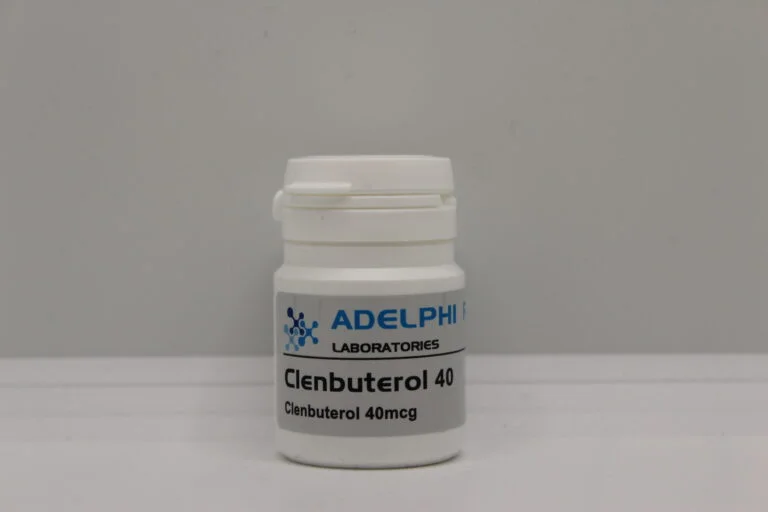
The term “Clenbuterol 40” is commonly used in product descriptions to indicate a stated quantity or concentration of 40 micrograms (µg), depending on the particular product presentation.
However, the number alone does not completely describe a product.
Researchers should distinguish between:
- Total quantity
- Concentration
- Formulation
- Chemical identity
- Batch number
- Purity
- Analytical results
- Product presentation
For this reason, a product labelled “Clenbuterol 40” should be evaluated using its complete product specification and supporting analytical documentation rather than the number alone.
Dianabol vs Clenbuterol
Although Dianabol and Clenbuterol are sometimes discussed together, they are fundamentally different compounds.
| Characteristic | Dianabol | Clenbuterol |
|---|---|---|
| Chemical name | Methandrostenolone / Methandienone | Clenbuterol |
| General class | Anabolic-androgenic steroid | Sympathomimetic compound |
| Primary pharmacological target | Androgen receptor | Beta-2 adrenergic receptors |
| Steroid compound | Yes | No |
| Peptide | No | No |
| Primary research area | Steroid/androgen pharmacology | Adrenergic pharmacology |
| Molecular framework | Steroid | Non-steroidal small molecule |
The main distinction is therefore their chemical class and receptor activity.
They should not be treated as interchangeable compounds.
Dianabol and Clenbuterol Are Not Peptides
This is particularly important for a website such as GLP Peptides.
Tirzepatide and Retatrutide are peptide-based compounds.
Dianabol and Clenbuterol are small-molecule compounds and are not peptides.
Therefore, if GLP Peptides intends to publish information about these products, I recommend creating a separate website category such as:
Research Compounds
This can contain educational content about non-peptide research compounds while keeping the peptide category focused on products such as Tirzepatide and Retatrutide.
Analytical Testing of Dianabol and Clenbuterol
Analytical testing is an important consideration when evaluating research compounds.
Different analytical techniques can provide different types of information.
HPLC Testing
High-Performance Liquid Chromatography (HPLC) can be used to separate components within a sample and assess the composition of a compound preparation.
Depending on the analytical method, HPLC can provide information such as:
- Retention time
- Main compound peak
- Relative peak area
- Potential impurities
- Sample composition
HPLC results should be interpreted according to the method and specifications used by the testing laboratory.
Mass Spectrometry
Mass spectrometry (MS) can provide information about the molecular mass of a compound and can support compound identification.
For small-molecule research compounds such as Dianabol and Clenbuterol, mass spectrometry can be useful as part of an analytical testing strategy.
When appropriate, researchers can consider chromatographic and mass-spectrometric information together rather than relying on one analytical measurement.
Related article: [Mass Spectrometry for Peptides: How Identity Is Analysed]
For this article, consider changing that internal link to a broader “Mass Spectrometry & Analytical Testing” page because Dianabol and Clenbuterol are not peptides.
Certificates of Analysis for Research Compounds
A Certificate of Analysis (COA) provides analytical information associated with a particular product or batch.
Depending on the supplier and laboratory, a COA may include:
- Product name
- Batch or lot number
- Test date
- Analytical method
- Purity result
- Identity information
- Laboratory information
- Specification or acceptance criteria
When evaluating a research compound, researchers should review the actual analytical data provided.
A COA can be useful for documenting a batch, but the presence of a COA by itself does not establish every aspect of product quality.
How Should Dianabol and Clenbuterol Be Stored?
Storage requirements depend on the specific product, formulation and manufacturer’s instructions.
Research compounds should be protected from environmental conditions that could potentially affect their stability.
Important considerations may include:
- Temperature
- Humidity
- Direct light
- Container integrity
- Storage duration
- Handling
- Repeated temperature changes
For powdered materials, a cool, dry environment protected from direct light may be appropriate where specified by the product’s storage requirements.
The product-specific storage instructions should always take precedence.
Why Product Testing Matters
A product name or stated quantity does not provide a complete picture of a research compound.
When evaluating Dianabol or Clenbuterol research material, researchers may consider:
Identity
Does the analytical documentation support the identity of the compound?
Purity
Is an appropriate analytical method used to assess the sample?
Batch information
Can the product be associated with a specific batch or lot?
Documentation
Are relevant analytical results available?
Storage
Are appropriate storage conditions clearly specified?
Traceability
Is there sufficient information to connect the product with its testing documentation?
Considering these factors together provides a more complete basis for evaluating research materials.
Dianabol and Clenbuterol: Important Research Distinctions
Although these compounds are sometimes grouped together online, they should be understood separately.
Dianabol is primarily relevant to androgen receptor and steroid research, whereas Clenbuterol is primarily relevant to adrenergic receptor research.
Their:
- Chemical structures
- Molecular classes
- Receptor targets
- Metabolic pathways
- Analytical characteristics
are different.
This distinction is important when interpreting scientific literature or analytical documentation.
Research Use and Responsible Handling
Research compounds should be handled according to appropriate laboratory procedures and applicable regulations.
Researchers should ensure that:
- The intended research purpose is clearly defined.
- Appropriate laboratory procedures are followed.
- Products are correctly identified.
- Relevant analytical documentation is retained.
- Storage requirements are followed.
- Appropriate personal protective equipment and laboratory controls are used where required.
- Applicable institutional and regulatory requirements are observed.
Research-use materials should also be clearly distinguished from authorised medicines.
Dianabol and Clenbuterol in the UK
Researchers looking for Dianabol or Clenbuterol research compounds in the UK should pay attention to product documentation and intended use.
Important considerations include:
- Chemical identity
- Batch information
- Analytical testing
- Purity documentation
- Storage information
- Product traceability
- Research-use designation
- Applicable UK requirements
The regulatory status and permitted use of a particular compound can depend on the product, intended use and applicable legislation. Researchers should verify the current requirements relevant to their circumstances rather than relying solely on supplier descriptions.
Frequently Asked Questions
Is Dianabol a peptide?
No. Dianabol, also known as methandrostenolone or methandienone, is an anabolic-androgenic steroid. It is not a peptide.
Is Clenbuterol a peptide?
No. Clenbuterol is a small-molecule sympathomimetic compound and is not a peptide.
What is Dianabol?
Dianabol is a commonly used name for methandrostenolone, a synthetic anabolic-androgenic steroid that interacts with the androgen receptor.
What is Clenbuterol 40?
“Clenbuterol 40” generally refers to a Clenbuterol product described as containing or being presented at 40 micrograms (µg), depending on the specific product format. The complete product specification should be checked before interpreting the label.
Are Dianabol and Clenbuterol the same?
No. They are chemically and pharmacologically different compounds. Dianabol is an anabolic-androgenic steroid, while Clenbuterol is primarily associated with beta-2 adrenergic receptor activity.
How are Dianabol and Clenbuterol tested?
Analytical methods such as chromatography and mass spectrometry can be used to investigate the identity and purity of small-molecule research compounds. The appropriate analytical method depends on the compound and testing objective.
What is a Certificate of Analysis?
A Certificate of Analysis, or COA, is a document containing analytical information relating to a particular product or batch. It may include identity, purity, testing method and batch information.
How should research compounds be stored?
Storage requirements depend on the individual compound and formulation. Researchers should follow the specific product storage instructions and protect materials from inappropriate temperature, moisture and light exposure where relevant.
Are Dianabol and Clenbuterol research peptides?
No. Neither compound is a peptide. They belong to different small-molecule chemical classes and should be categorised separately from peptide products such as Tirzepatide and Retatrutide.
Conclusion
Dianabol and Clenbuterol are distinct research compounds with fundamentally different chemical structures and pharmacological targets.
Dianabol (methandrostenolone) is an anabolic-androgenic steroid associated with androgen receptor pharmacology, while Clenbuterol is a sympathomimetic compound primarily associated with beta-2 adrenergic receptor activity.
The term Clenbuterol 40 generally refers to a product presentation involving a stated 40-microgram quantity or concentration, but the complete product specification should always be reviewed.
For research purposes, important considerations include compound identity, analytical testing, purity, batch documentation, storage requirements and traceability.
Understanding these distinctions helps researchers evaluate scientific information and research materials more accurately.
