
Uncategorized
Research Peptides UK: Quality, Testing, Storage & Handling Guide
Sep
Research peptides UK, are increasingly used in laboratory and scientific research because of their role in studying biological processes, molecular interactions and peptide-related mechanisms.
However, the quality and integrity of a research peptide can depend on several factors, including compound identity, purity, analytical testing, storage conditions, handling and transportation.
For researchers sourcing research peptides in the UK, understanding these factors can help when evaluating products and their accompanying documentation.
This guide explains the key considerations surrounding research peptides, from analytical testing and Certificates of Analysis to storage and handling.
Important: Research peptides are intended for laboratory and research use only. They should not be represented as medicines or used for human or veterinary treatment unless specifically authorised for that purpose.
What Are Research Peptides?
Peptides are short chains of amino acids connected by peptide bonds. Depending on their sequence and structure, peptides can be investigated for a wide range of biological and biochemical properties.
Research peptides are peptide compounds supplied for scientific and laboratory research rather than as approved medicines.
Researchers may study peptides to investigate areas such as:
- Molecular interactions
- Peptide structure and properties
- Biological pathways
- Receptor interactions
- Stability and degradation
- Analytical methods
- Structure-function relationships
- Pharmaceutical and biochemical research
The specific purpose and methodology of a research project will determine how a peptide is studied.
What Should You Look For When Buying Research Peptides in the UK?
When evaluating a research peptide supplier, it is useful to consider more than the product name or stated purity.
Several factors can provide useful information about the quality and traceability of a research product.
1. Compound Identity
The identity of the supplied compound should be clearly documented.
Analytical techniques such as mass spectrometry (MS) can be used to investigate molecular mass and support compound identification.
This is particularly important when working with peptides that have similar names or related molecular structures.
2. Purity Testing
Purity is another important consideration when evaluating research peptides.
High-Performance Liquid Chromatography (HPLC) is commonly used in peptide analysis to separate components within a sample and assess the relative proportion of the target compound.
A reported purity percentage should be considered alongside the analytical method, test results and supporting documentation.
For products supplied by GLP Peptides, batch testing documentation should be available where applicable.
HPLC Testing for Research Peptides
HPLC is one of the commonly used analytical techniques for assessing peptide samples.
During HPLC analysis, components of a sample are separated based on their interactions with the chromatographic system.
The resulting chromatogram can provide information about:
- Main compound peaks
- Potential impurities
- Retention time
- Relative peak areas
- Sample composition
HPLC results should be interpreted in the context of the analytical method and the specific peptide being tested.
Read more: [Peptide Purity Testing: HPLC, Mass Spectrometry & COAs Explained]
Mass Spectrometry and Peptide Identification
Mass spectrometry provides information about the molecular mass of compounds and can be used as part of peptide characterisation.
When combined with other analytical techniques, MS can provide useful evidence supporting the identity of a research peptide.
A comprehensive testing approach may therefore involve multiple analytical methods rather than relying on a single measurement.
Related guide: [Mass Spectrometry for Peptides: How Identity Is Analysed]
What Is a Peptide Certificate of Analysis?
A Certificate of Analysis (COA) is a document containing analytical information about a particular product or batch.
Depending on the supplier and product, a COA may include information such as:
- Product name
- Batch or lot number
- Testing date
- Analytical method
- Purity result
- Molecular mass or identity information
- Laboratory information
- Specification or acceptance criteria
A COA can therefore provide researchers with useful documentation when evaluating a research product.
However, researchers should consider the actual information contained in the document rather than treating the presence of a COA alone as proof of every aspect of product quality.
Learn more: [What Is a Peptide Certificate of Analysis (COA)?]
How Should Research Peptides Be Stored?
Storage conditions can have an important effect on peptide stability.
The appropriate conditions depend on the specific peptide, formulation and supplier’s instructions.
Unreconstituted Peptides
Peptides supplied in powder form should generally be kept in a cool, dry environment and protected from direct light.
For longer-term storage, freezing may be appropriate where specified by the product’s storage requirements.
Liquid or Reconstituted Peptides
Where a peptide has been reconstituted or supplied in liquid or pen form, refrigerated storage may be required.
For products requiring refrigeration, a commonly specified range is:
2°C to 8°C (36°F to 46°F)
The product-specific storage instructions should always take precedence because storage requirements can vary between formulations.
Read more: [How to Store Research Peptides: Temperature, Light & Handling]
Why Does Peptide Handling Matter?
Research peptides can be sensitive to environmental conditions and inappropriate handling may affect product integrity.
Researchers should consider factors including:
- Temperature
- Exposure to light
- Moisture
- Repeated temperature changes
- Container integrity
- Storage duration
- Handling procedures
- Transportation conditions
Maintaining appropriate storage and handling procedures helps reduce unnecessary exposure to conditions that could affect the stability of the research material.
Peptide Stability and Degradation
Peptide stability can be influenced by several environmental and chemical factors.
Depending on the peptide, potential factors may include:
Temperature
Temperature fluctuations can affect the stability of some peptide compounds.
Light
Some compounds may be sensitive to prolonged exposure to light, making protection from direct light an important storage consideration.
Moisture
Moisture can potentially affect certain peptide formulations, particularly powdered materials.
Handling
Repeated handling, inappropriate storage or unnecessary exposure to environmental conditions may affect product integrity.
For this reason, researchers should follow the specific storage and handling information supplied with each product.
Research Peptides and Responsible Research
Research peptides should be handled according to the requirements of the research environment and applicable regulations.
Researchers should ensure that:
- Products are used only for appropriate research purposes.
- Relevant laboratory procedures are followed.
- Appropriate documentation is maintained.
- Storage requirements are observed.
- Product information is reviewed before use.
- Applicable institutional and regulatory requirements are considered.
Research-use products should also be clearly distinguished from approved pharmaceutical medicines.
Research Peptides UK: What Does Quality Mean?
When researching research peptides in the UK, quality should be considered as a combination of several factors rather than a single number.
Important considerations include:
Identity
Is there appropriate analytical information supporting the identity of the compound?
Purity
Has the product been analysed using an appropriate analytical method?
Documentation
Is relevant batch information available?
Storage
Have appropriate storage conditions been specified and maintained?
Handling
Are products handled and packaged appropriately?
Traceability
Can the product be associated with a specific batch and supporting documentation?
Considering these factors together gives researchers a more complete picture of a research product.
GLP Peptides: Research Peptides in the UK
GLP Peptides focuses on supplying research-use peptide products with an emphasis on product quality, analytical testing, appropriate storage and reliable service.
Our approach includes attention to product handling, documentation and testing where applicable.
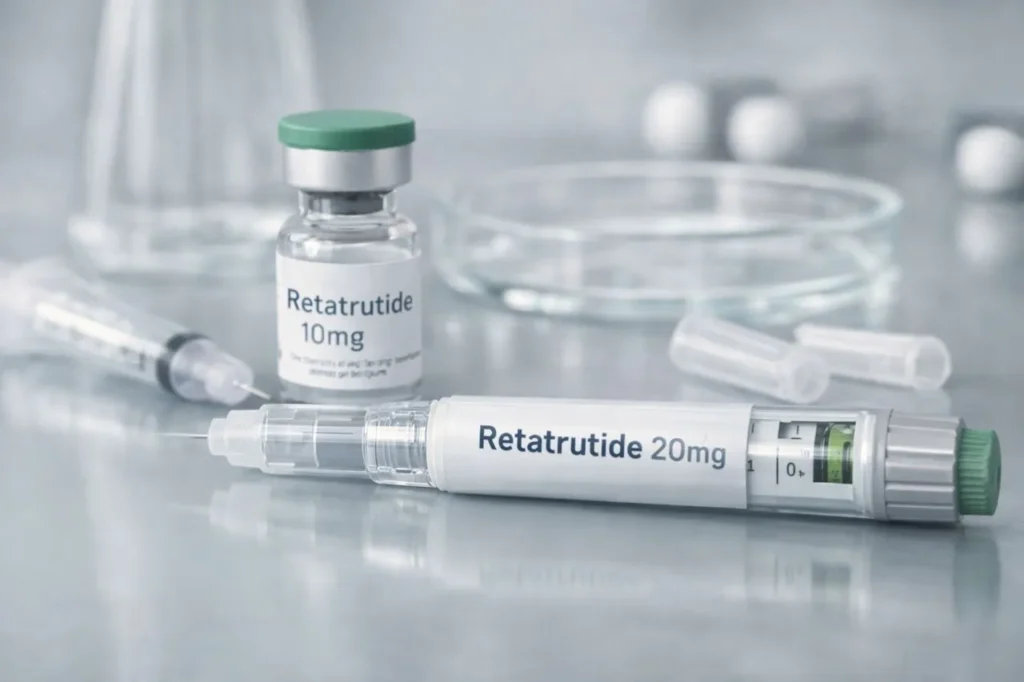
Our research peptide range includes products such as Tirzepatide and Retatrutide, which are supplied for research purposes.
Researchers can review the relevant product information and testing documentation before making purchasing decisions.
Explore our research peptides: [Research Peptides UK]
Frequently Asked Questions
What are research peptides?
Research peptides are peptide compounds supplied for laboratory and scientific research. They are intended for research purposes rather than use as approved medicines or treatments.
How are research peptides tested?
Research peptides can be assessed using analytical techniques including HPLC and mass spectrometry. The appropriate testing approach depends on the compound and the purpose of the analysis.
What is HPLC testing?
HPLC, or High-Performance Liquid Chromatography, is an analytical technique used to separate components within a sample and assess characteristics such as relative purity.
What is a peptide COA?
A Certificate of Analysis (COA) provides analytical and batch information relating to a particular product. Depending on the product, it may include purity, identity, testing methods and batch information.
How should research peptides be stored?
Storage requirements vary depending on the peptide and formulation. Powdered products should generally be protected from moisture, excessive heat and direct light, while some liquid or reconstituted products require refrigeration at 2°C to 8°C.
Always follow the product-specific storage instructions.
Are research peptides medicines?
Research peptides should not automatically be considered medicines. Products supplied specifically for research purposes should be distinguished from authorised pharmaceutical products.
Conclusion
When sourcing research peptides in the UK, product quality involves more than simply looking at a stated purity percentage.
Researchers should consider compound identity, analytical testing, purity, documentation, storage, handling and traceability when evaluating research materials.
HPLC, mass spectrometry and Certificates of Analysis can provide useful analytical information, while appropriate storage and handling can help maintain product integrity.
For researchers looking for research-use peptide products in the UK, understanding these factors can make it easier to evaluate products and supporting documentation appropriately.
